
Crew Change in Batam: What Owners and Managers Should Prepare
A crew change may look straightforward from the vessel’s side, but several arrangements often need to come together before a seafarer can safely join or leave the vessel in Batam.
Owners and vessel managers usually need to coordinate crew documents, travel schedules, immigration requirements, transport, accommodation and vessel access around the same operational window. If one part of the plan changes, the rest of the arrangement may also need to be adjusted.
The key is to share the crew movement details early and keep them aligned with the vessel’s latest ETA, berth or shipyard location and expected departure schedule.
This guide covers the main information and local arrangements owners and managers should prepare when planning a crew change in Batam.
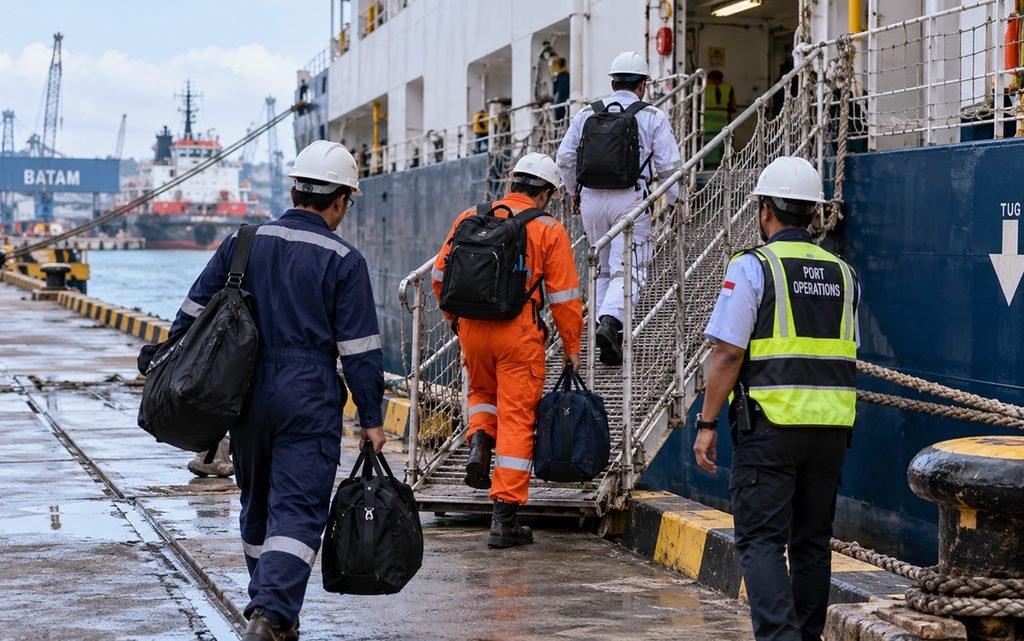
Confirm Who Is Joining and Signing Off
Start by identifying exactly who will join and who will sign off the vessel in Batam. For each person, the local agent needs enough information to understand the movement and prepare the arrangements required around the vessel’s schedule.
The details should normally include the seafarer’s full name, nationality, rank, passport information and whether they are joining or signing off. If several crew members are moving at the same time, it is helpful to provide the complete crew change list together rather than sending the details separately.
Any special circumstances should also be identified early, such as medical requirements, unusual travel arrangements or crew members whose movement depends on a specific vessel activity. This gives the local team more time to coordinate the crew change without relying on last-minute clarification.
Share Travel Details Early
Travel information should be shared as soon as it is available, especially for joining crew who need to reach Batam before the vessel is ready for boarding. Flight details, arrival airport, travel date and expected arrival time help the local agent plan the onward transfer to the vessel, hotel or waiting location.
For signing-off crew, the onward travel plan is just as important. The expected disembarkation time should be coordinated with the vessel schedule so transport and flight arrangements are realistic and do not leave too little time between leaving the vessel and reaching the airport.
If travel plans are still tentative, it is better to share the latest available schedule and update it when confirmed. Early visibility allows the local team to prepare transport and accommodation around the crew movement instead of arranging everything after the travel details are final.
Prepare the Required Crew Documents
Crew changes normally require more than travel details. The local agent may also need passport copies, seafarer documents, crew lists and other supporting documents to prepare the immigration and local arrangements connected with the movement.
The exact document set can depend on the crew member’s nationality, role, travel route and whether they are joining or signing off. For that reason, it is better to send the available documents early so the local agent can review what is complete and identify anything still missing before the travel date. These crew details should form part of the vessel pre-arrival information shared with the local agent.
Crew documents should also be checked for validity before the movement is finalised. Resolving an expired or incomplete document after the seafarer has already travelled can create unnecessary delay and complicate the crew change schedule.
Coordinate Transport, Accommodation and Vessel Access
Once the travel and crew details are clear, the next step is to coordinate how each person will move between the airport, hotel, port, shipyard or vessel. These transfers need to follow the actual joining or sign-off plan rather than being treated as separate travel bookings.
Accommodation may also be required when crew members arrive before the vessel is ready, sign off late in the day or need to wait for an onward flight. Sharing the expected timing early helps the local agent arrange a practical sequence without creating unnecessary waiting or additional hotel nights.
Vessel access should be considered at the same time. Depending on where the vessel is located, boarding or disembarkation may involve port, terminal, shipyard or other local access arrangements. Coordinating these requirements in advance helps make the crew movement smoother once the seafarer reaches Batam. These arrangements form part of the crew and vessel support that may be required during the call.
Plan Around the Vessel Schedule
A crew change should be planned around the vessel’s latest ETA, berth or shipyard location and expected departure schedule. Even when the crew travel plan is confirmed, the movement may still need to change if the vessel arrives late, shifts location or extends its stay.
Joining crew should not be brought to the vessel too early if boarding access is not yet available, while signing-off crew need enough time to disembark, complete the required local arrangements and continue their onward travel without unnecessary pressure.
Keeping the local agent updated on meaningful schedule changes allows transport, accommodation and access arrangements to be adjusted before they become urgent. This helps keep the crew movement practical even when the vessel schedule changes at short notice.
Keep the Crew Change Connected to the Vessel Call
A crew change works best when the travel plan, documents, local transfers and vessel schedule are treated as one operation. Each part may be handled separately, but they all depend on the same timing and vessel location.
Not every detail has to be final from the beginning. What matters is sharing the latest information, identifying what is still pending and updating the local agent when there is a meaningful change to the vessel or crew schedule.
For vessels in Batam, Batam Shipping can assist with crew change coordination, local transport, accommodation, vessel access and other supporting arrangements connected with the crew movement.
If you are planning a crew change in Batam, contact Batam Shipping to discuss the crew movement and local arrangements required for your vessel.